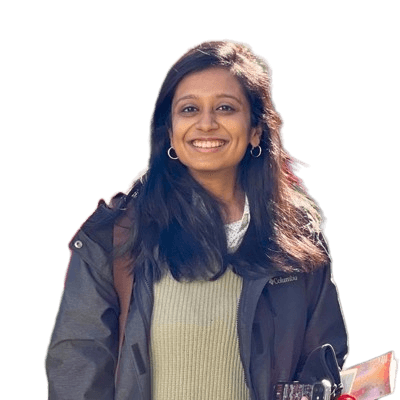
Ipshita Karmakar
Climate & Resilience
Urban planner and architect. MIT Fulbright scholar. World Bank resilience consultant. Founder.
World Bank · MIT
About
ClimateReadyX is a small team of planners, policy people and data folks. We started in 2024, in Mumbai, after watching good heat plans go nowhere.
Climate & Resilience
Urban planner and architect. MIT Fulbright scholar. World Bank resilience consultant. Founder.
World Bank · MIT

Governance & Innovation
10+ years with governments and development organisations. Founder, The Metropolitan Institute.
MPP, UChicago · 1991 Fellow, George Mason Univ · Analyst, World Bank
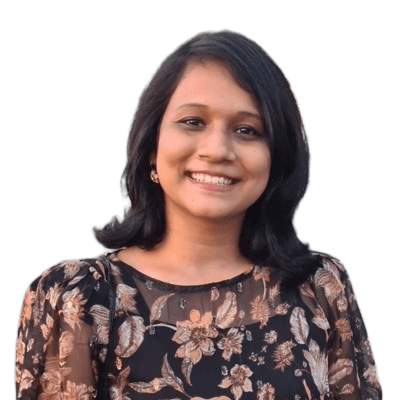
Research & Urban Design
Urban designer and architect. 7+ years in residential, commercial and sustainable design.
Visiting Professor, Thakur College of Architecture · Research & Design Consultant, EdEn

Product
Data scientist with experience in payments and healthcare products.
Tech and AI, PayPal · Climate Reality Leader

Sujata Saunik
Former Chief Secretary, Govt. of Maharashtra
Priya Khan
Advisor to Chief Minister of Maharashtra
Vineet Abhishek
Western Railways

Aneerudha Paul
IIT Bombay
We have lived and worked in Mumbai. Summer there now shapes the whole day for the people who work outside: vendors, delivery riders, construction crews, traffic police.
Cities are not ignoring this. Heat action plans get written and consultants get hired. But we kept watching the plans stall at the same point. The officials in charge could not tell which wards to act on first, or what it would cost to wait.
Most heat studies look at a whole city. A city average hides the difference between a market under tin roofs and a street lined with old trees a few kilometres away. Studies that are scaled down to ward level carry large errors.
The reports are also written in climate language, not in the budgets, staff and schedules a ward officer works with. So the money goes where it always goes. The people who pay for that are outdoor workers, families in informal settlements and older residents.
ClimateReadyX shows heat ward by ward, starting with Mumbai's 24 wards and daily temperatures going back to 2003. It shows who is exposed in each ward and suggests what to do first.
It also puts a rupee figure on doing nothing. That is the number that gets attention in a budget meeting.
Since 2024 we have done 20 interviews with officials and practitioners, partnered with 3 government bodies and 9 civil society groups, and run 2 roundtables in Maharashtra with officials, industry and academics in the same room.
The biggest lesson: data alone does not move a city. It has to come with practical judgement from people who have actually run these programmes. In 2026 UNEP named us a Cool Mitra, one of the grassroots efforts in India helping communities cope with extreme heat.
Next, we want our first paid pilot with a city corporation, and to keep checking our results against the heat that actually happened.
Further out, we want ward-level heat risk to guide budget decisions in 20 Indian cities by 2031.